








How to Use a Color Wheel to Help Decorate Your Home
Learn the basics of color theory and about primary, secondary and tertiary colors. Plus get tips on how to choose a monochrome, complementary or analogous color scheme.
When you're decorating, choosing a color scheme can be a perplexing task. It's hard enough whittling down your choice to one or two colors — but then to have to mix and match even more of them into an eye-pleasing scheme? Sometimes considering the whole color wheel is just too much to ask.

Modern Multicolored Living Room With Green Rug
This stunning living room might be part of a suite in an exciting modern art museum, its combination of colors and artwork are so eye-catching.

Photo by: Ryan Garvin
Ryan Garvin
Before you turn back on the world of color, get a grasp of the color wheel and how it works.
The Basic Color Wheel
In 1666, Sir Isaac Newton performed a prism experiment in which he discovered that pure white light contains the full spectrum of colors — in effect, creating the world’s first color wheel. From there, philosophers, scientists, artists and designers have continued studying the components of color and its physical, psychological and philosophical effects.

Basic color wheel
Newton's wheel is made up of 12 colors, which are classified into three categories:
Primary Colors: Red, Yellow + Blue

Secondary Colors: Orange, Green + Violet
Secondary colors are created by mixing primary colors.

Tertiary Colors
Tertiary colors are a combination of a secondary color and a primary color next to it. They include yellow-orange, red-orange, red-violet, blue-violet, blue-green and yellow-green.

Color Schemes
Now that you know the colors here are four common ways to use them in your home.
Monochromatic: One Color

Sarah Dorio
Daniel Feau Conseil Immobilier, SA., a member of Luxury Portfolio International

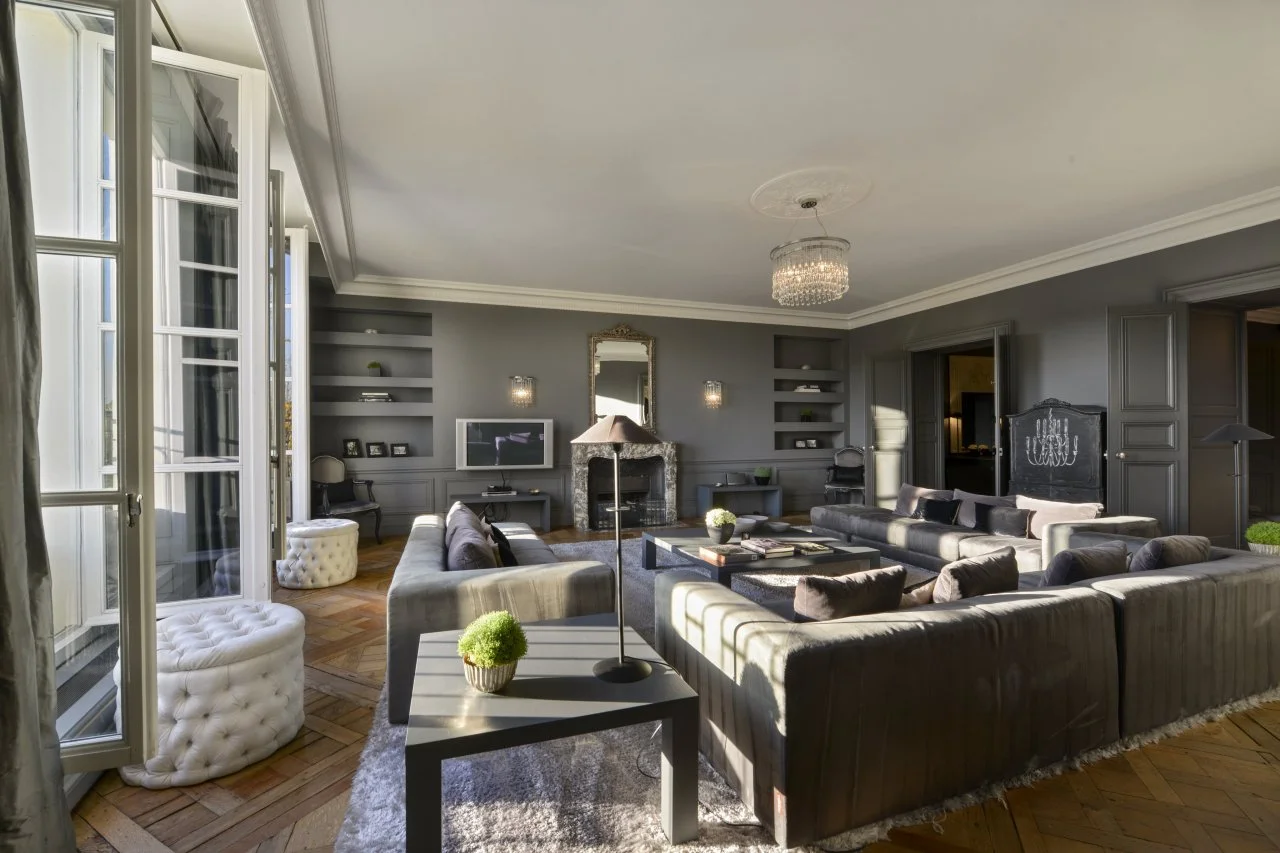
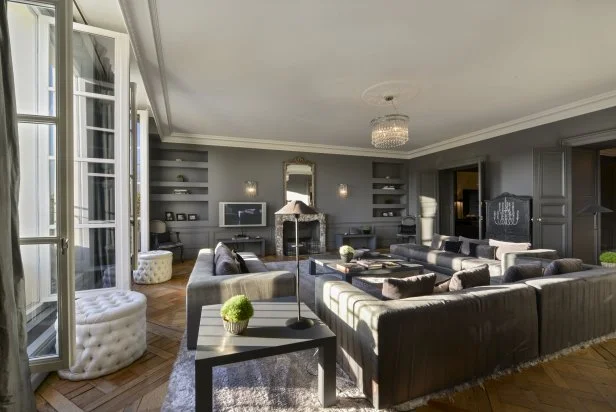
Contemporary Living Room: Natural Light
Oversized gray sofas provide plenty of comfy seating in this neutral contemporary living room. A long row of windows allow natural light to flood the space and perfect for entertaining.

Photo By: Daniel Feau Conseil Immobilier, SA., a member of Luxury Portfolio International
Take baby steps toward color with a monochromatic scheme. It's simply one color in varying intensities from light to dark.
Analogous: Two to Six Similar Colors

Carter Kay
David Tsay
Annie Sloan
Robert Peterson; Rustic White Photography
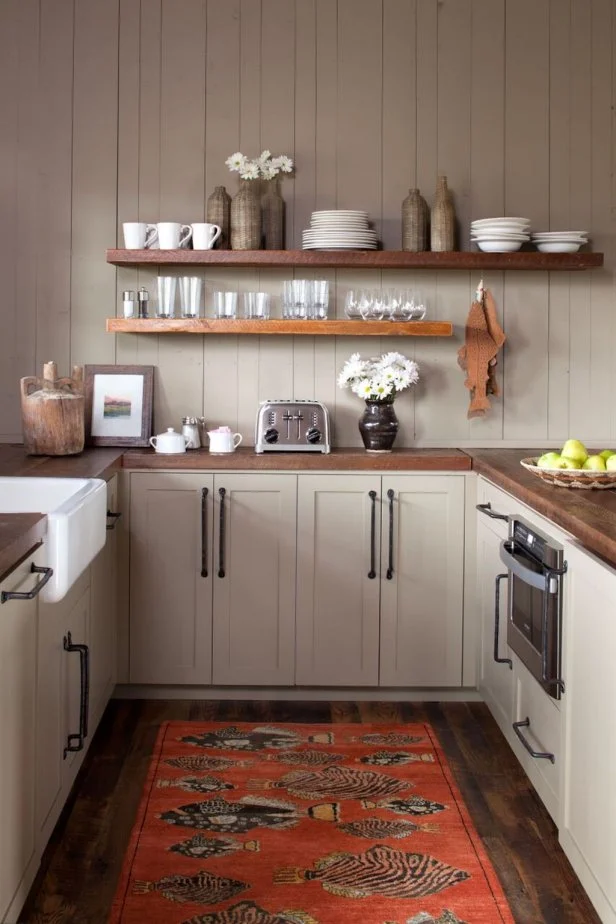
Rustic Kitchen With Farmhouse Sink
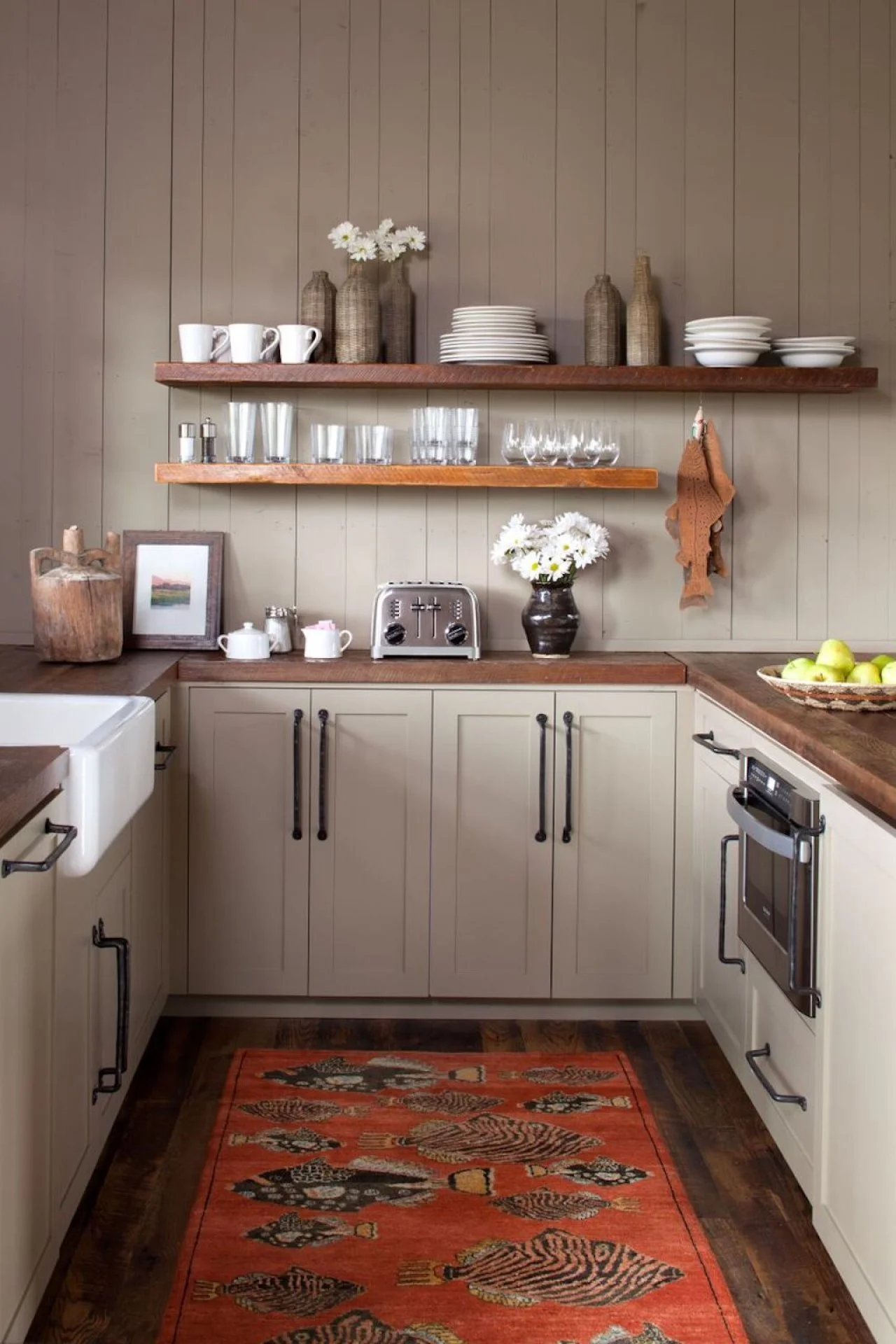
Taupe cabinets are clad in solid wood countertops for the small kitchen in this Montana bunkhouse. Open shelves keep dishes handy, while a vivid orange fish-motif rug adds color to the space.

Photo By: Carter Kay
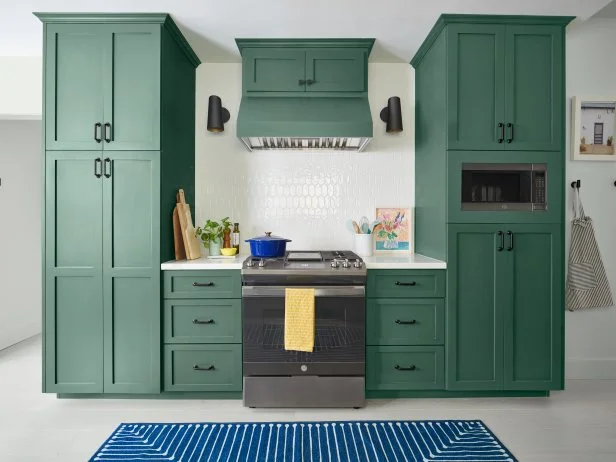
Modern Kitchen With Green Cabinets
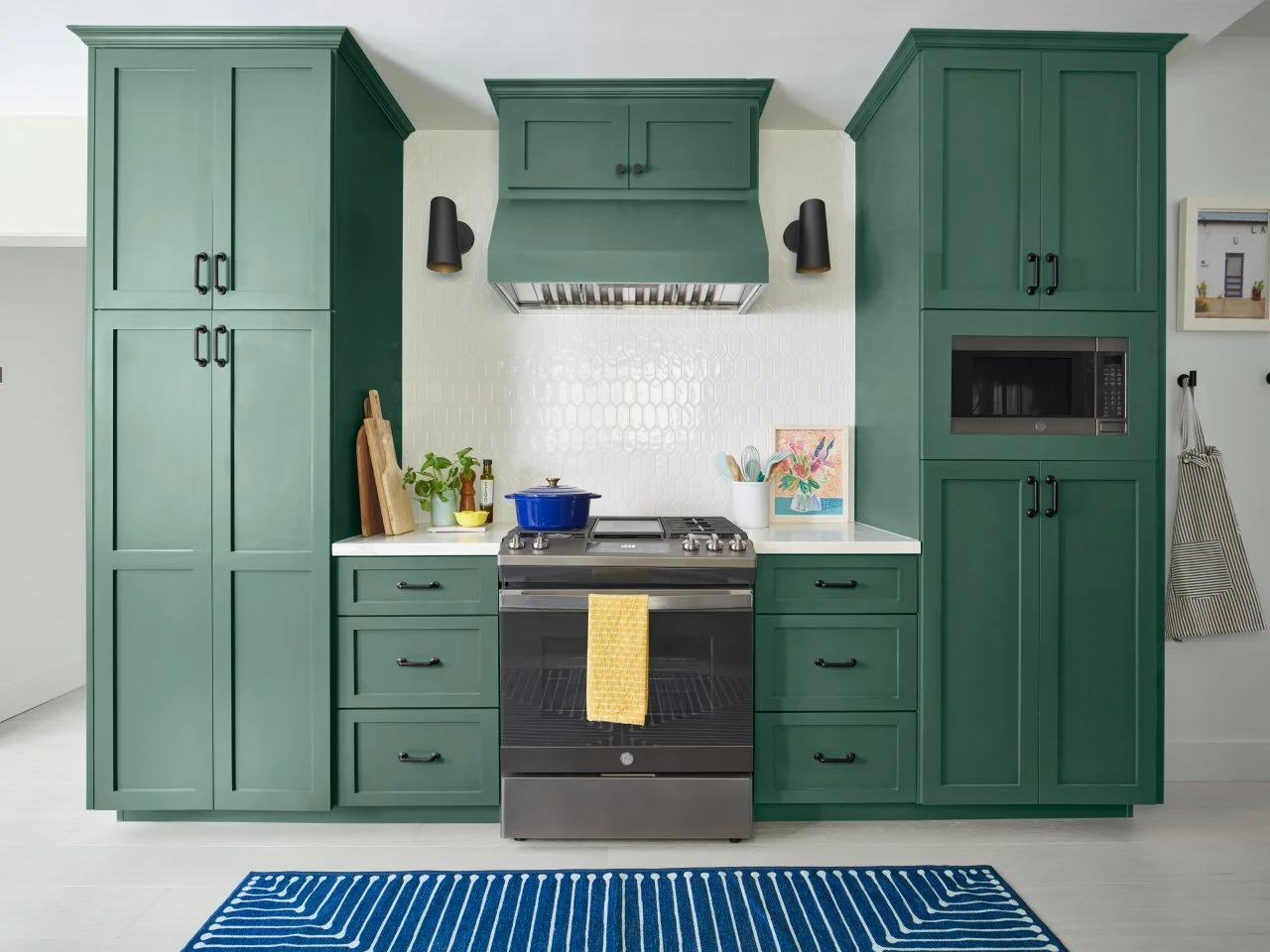
This modern kitchen features emerald green cabinets, white picket tile backsplash and a navy blue washable rug.

Photo By: David Tsay
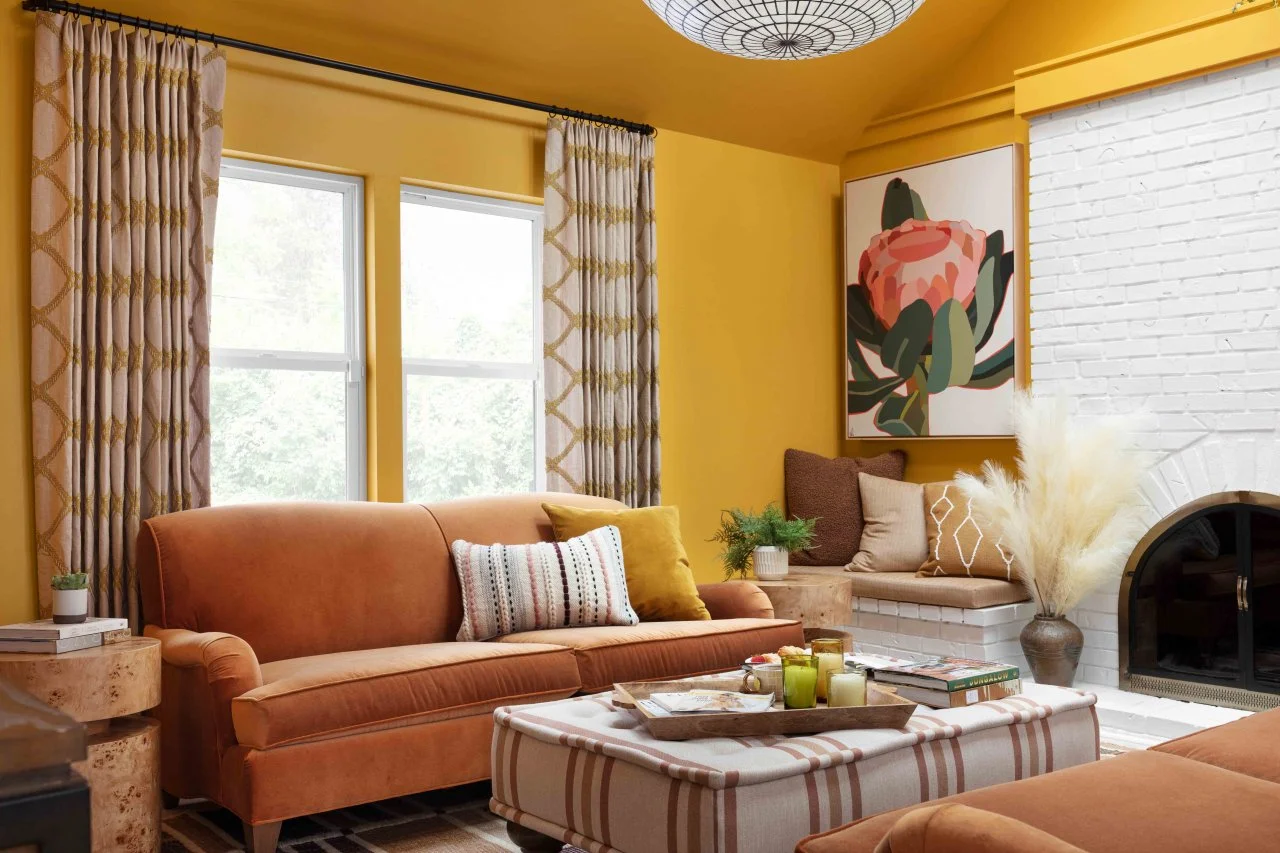
Lounge-Worthy Sofas
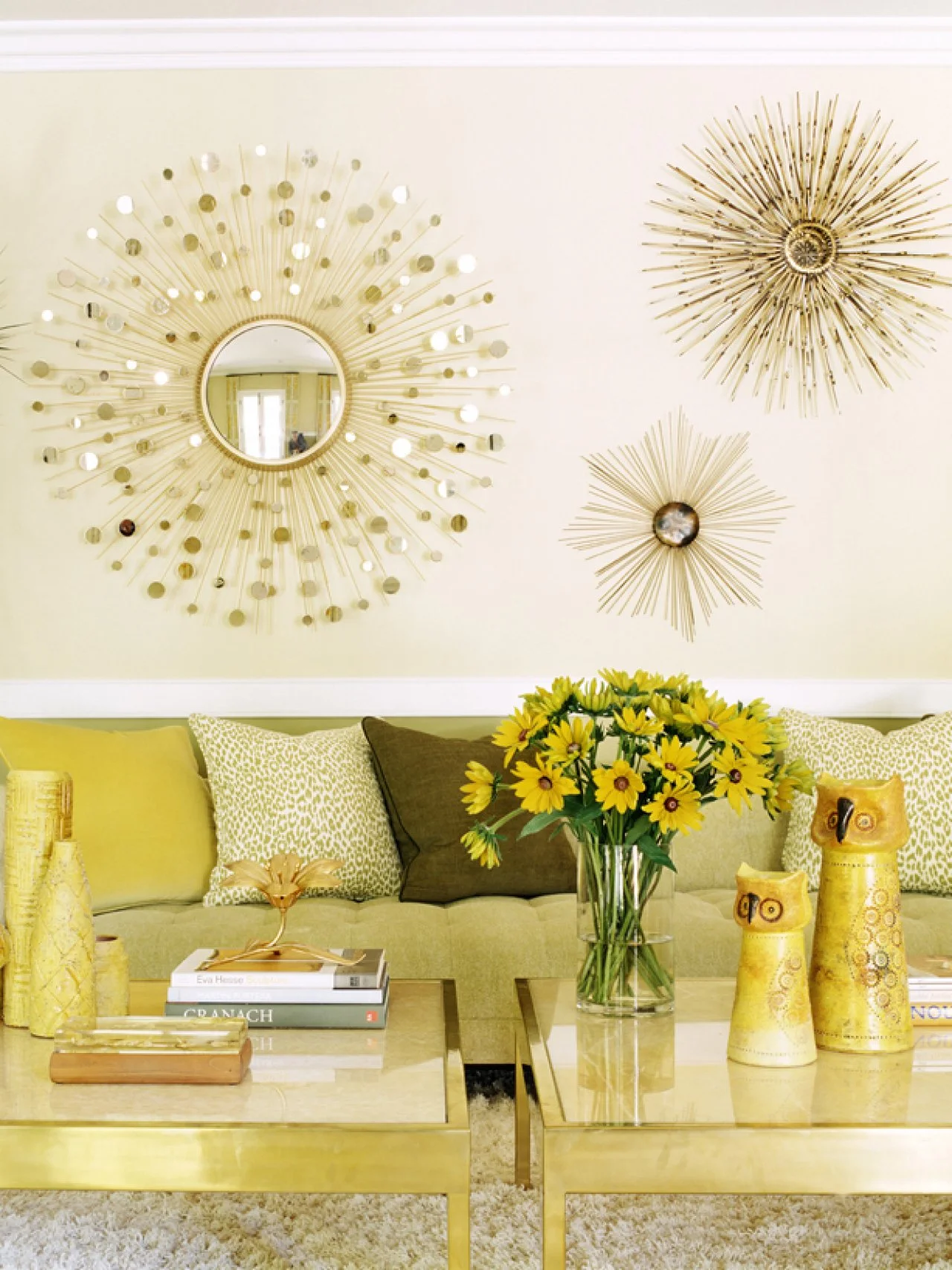
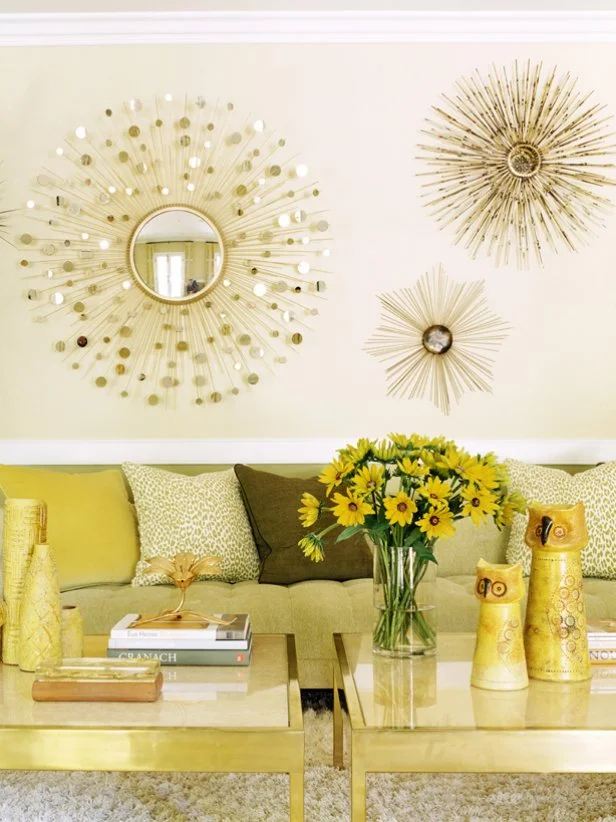
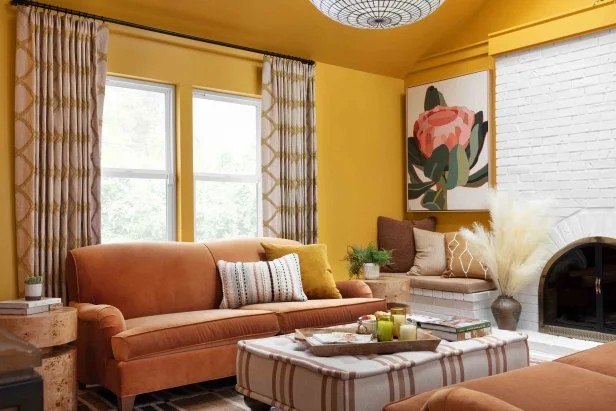
The living room’s two lounge-worthy custom sofas offer a fresh take on a classic English arm sofa, and provide super comfortable seating. The sofas are made from a performance fabric that looks and feels like velvet, but it’s washable. Its subtle cinnamon color pairs beautifully with the rich gold walls of the room.

Photo By: Robert Peterson; Rustic White Photography
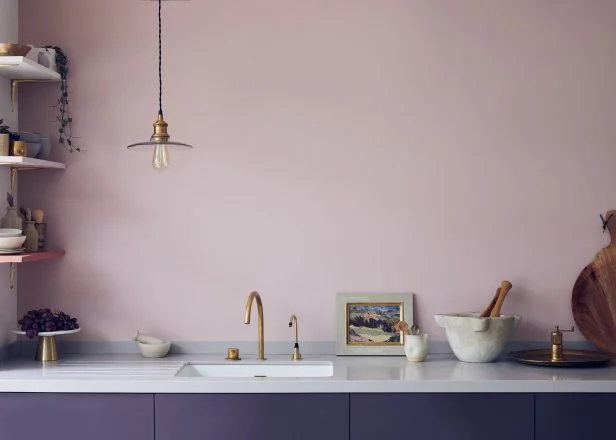
Branch out into color with an analogous scheme, which consists of two to six colors that sit next to each other on the wheel. Common choices include pairing blue and green, yellow and orange or red and pink.
Complementary: Two Contrasting Colors


Sam Oberter Photography
Amy Bartlam
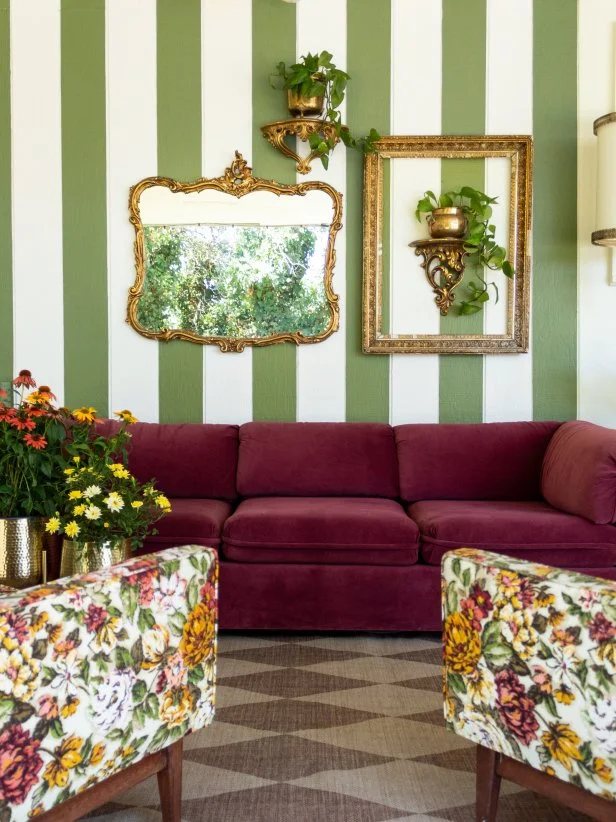
Jenasie Earl
Funky Blue Fireplace Surround Pairs With Classic White Mantel
A bold, vivid shade of royal blue surrounds the fireplace in this striking living room. The blue surround provides a lovely contrast — in both color and style — to the traditional white mantel.

Photo By: Sam Oberter Photography
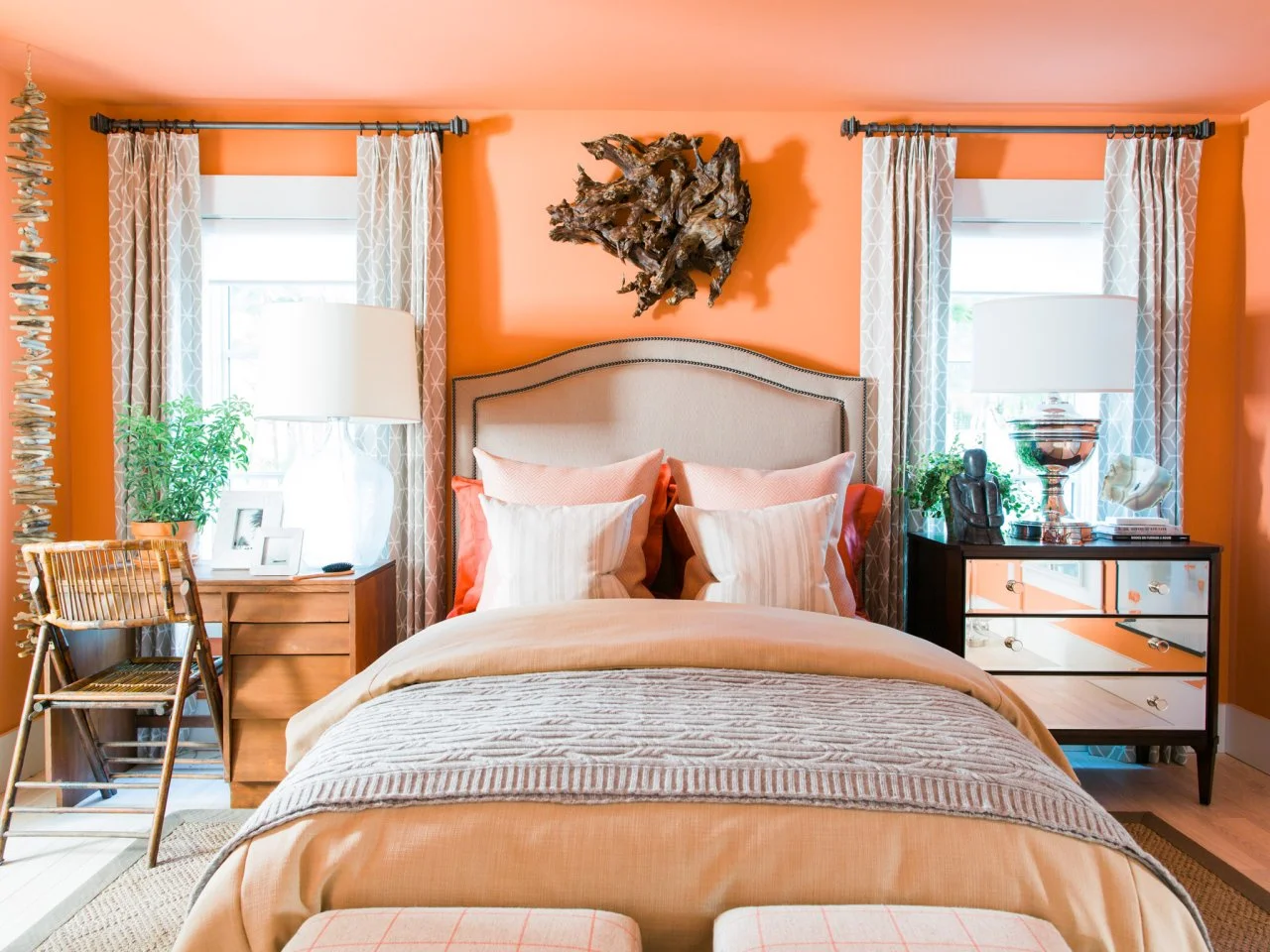
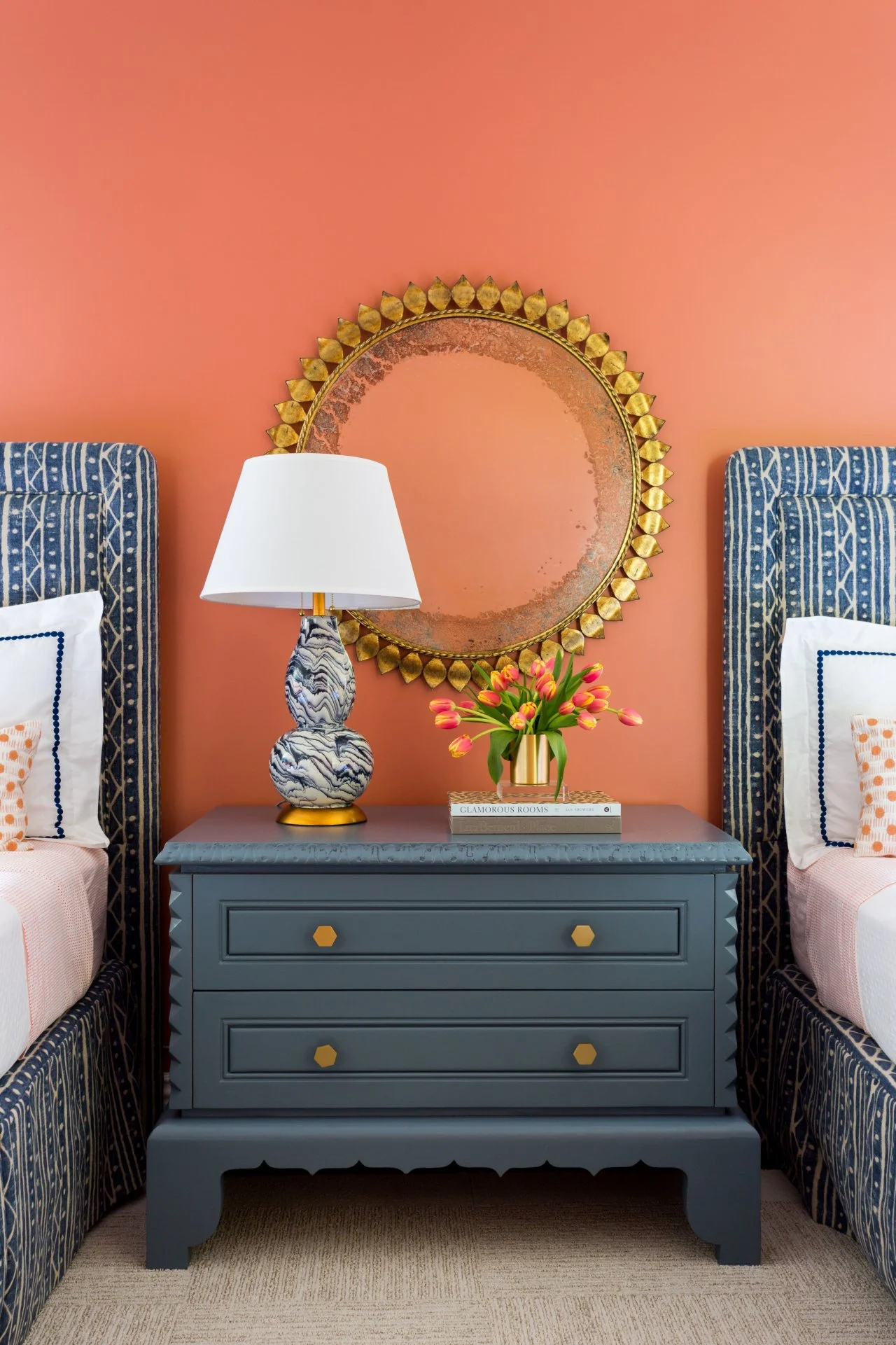
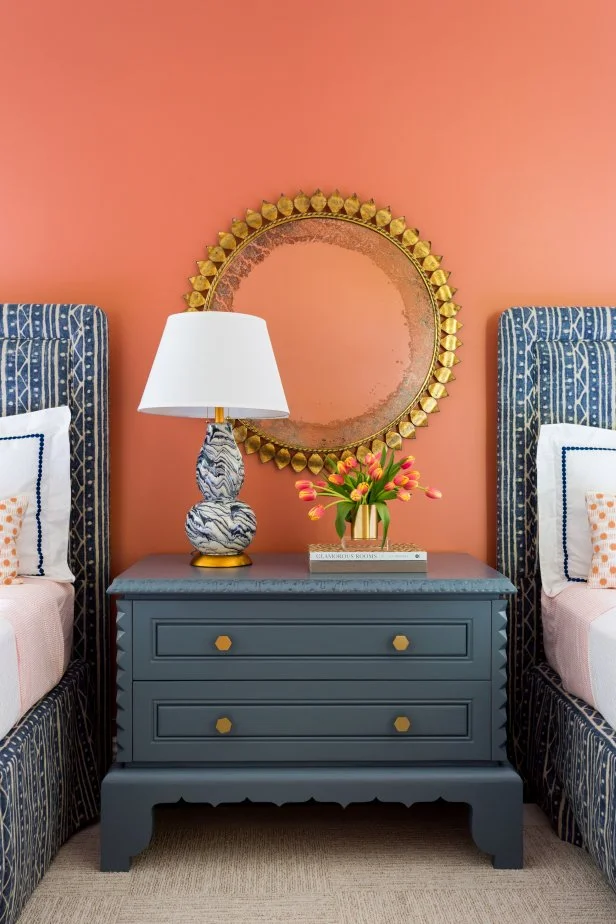
Eclectic Guest Bedroom With Orange Accent Wall
An orange accent wall instantly infuses this guest bedroom with warmth. The space also features two blue-patterned frames, a large dresser and a marbled lamp for reading into the evening.

Photo By: Amy Bartlam
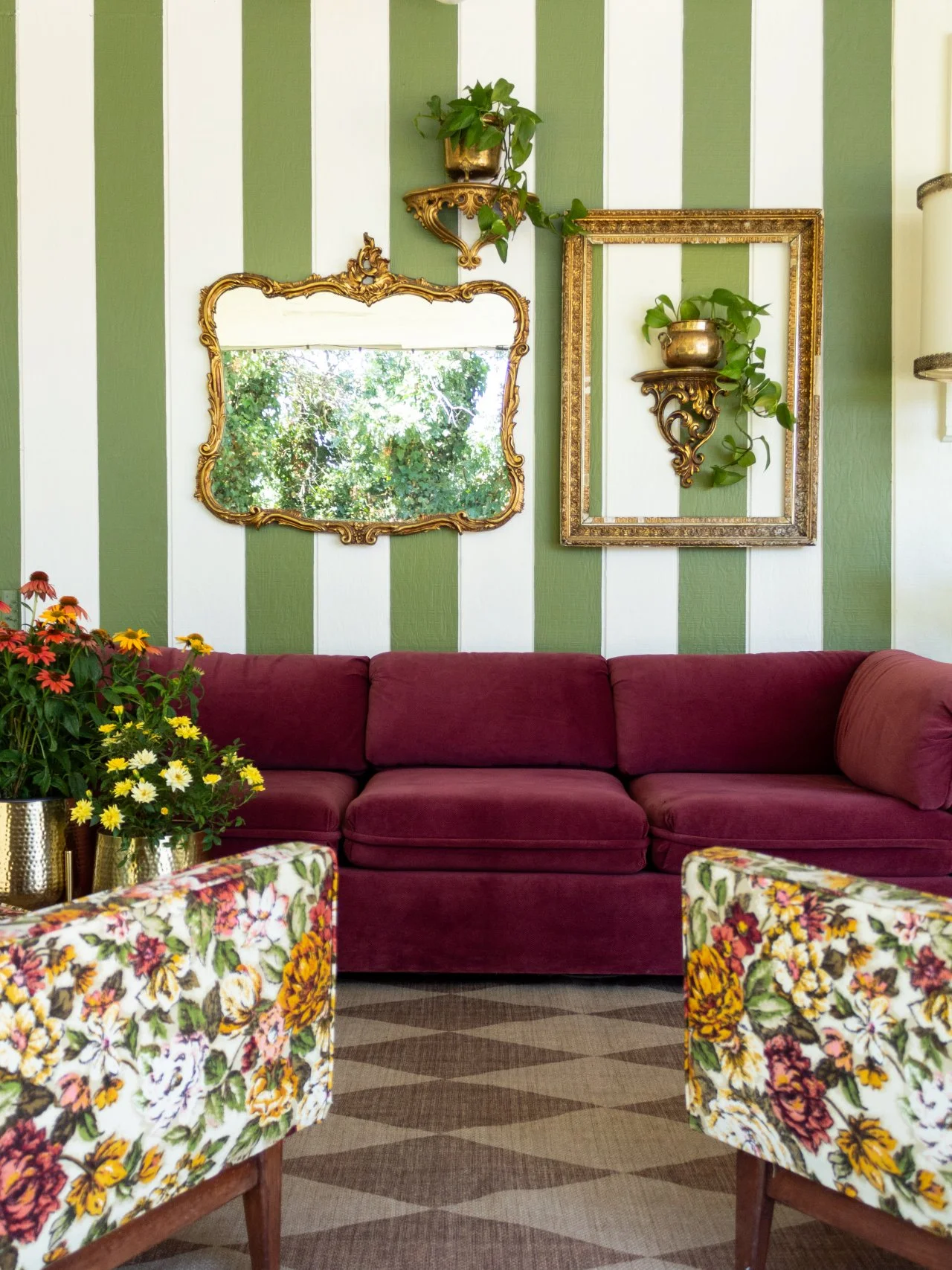
Eclectic Living Room With Green Striped Walls
HGTV Magazine shares the details on this eclectic living room with painted green stripes on the walls, vintage gold accents and a pair of floral chairs.
Photo By: Jenasie Earl
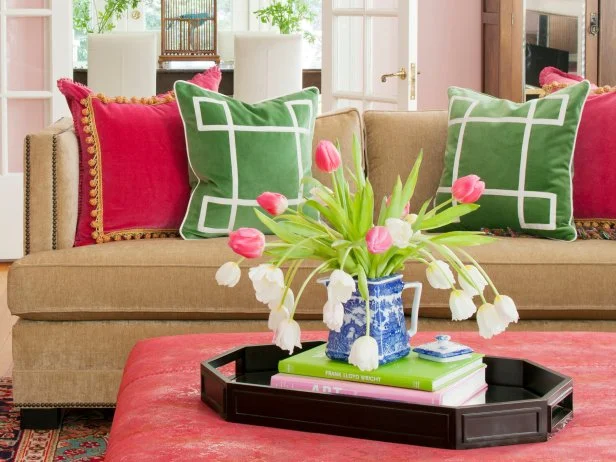
Want to go for high-contrast color? Use a complementary scheme — it includes hues that are directly across from each other on the wheel. Common examples include yellow and blue, red and green or purple and yellow.
Triad

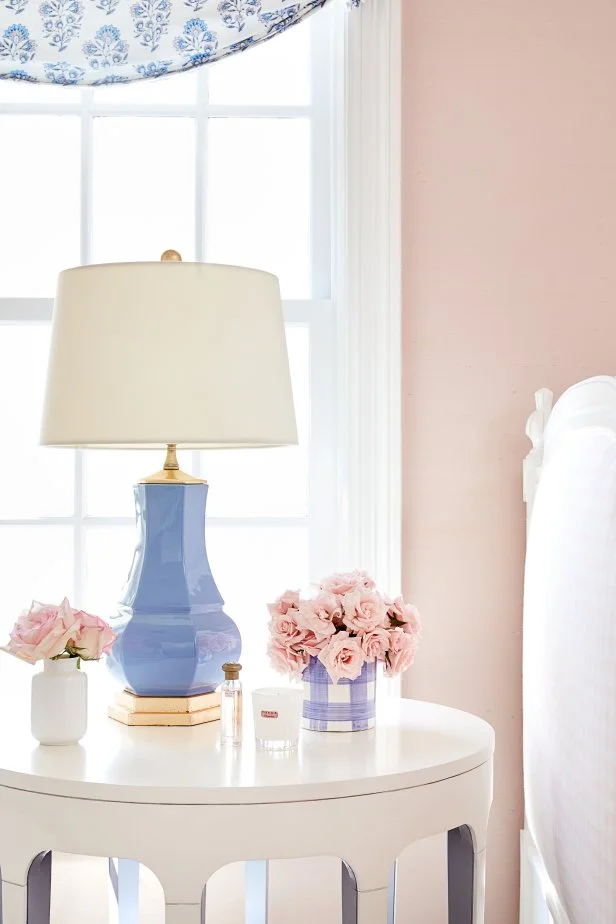
Katie Nixon Photography
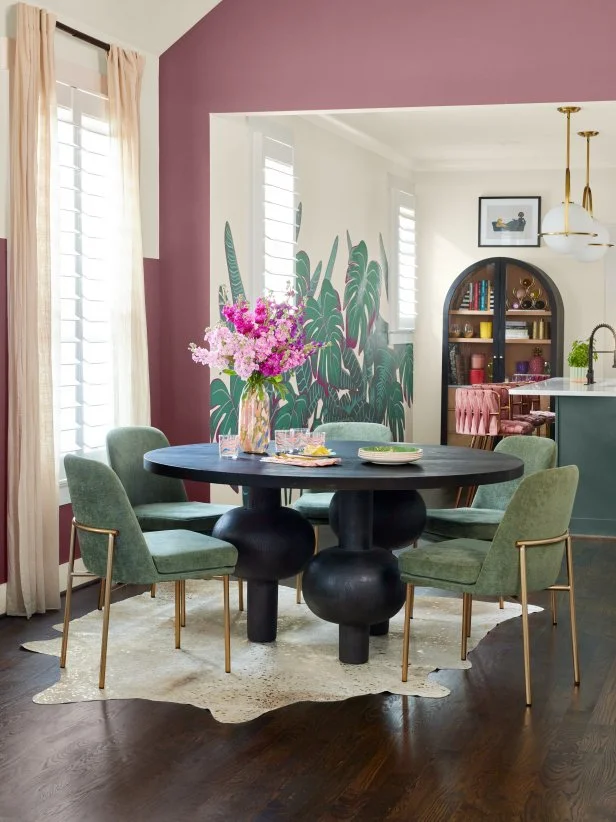
Adam Albright
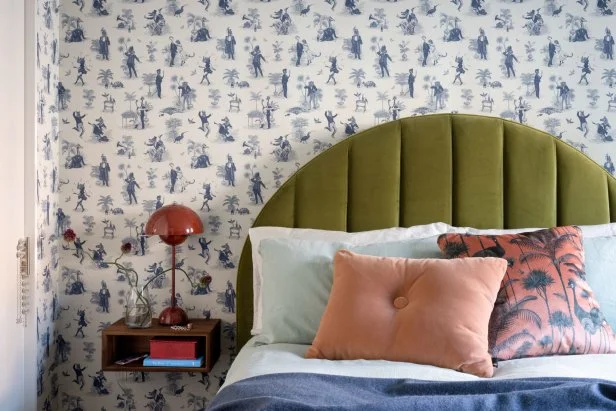
Corey Szopinski
Amina Mucciolo
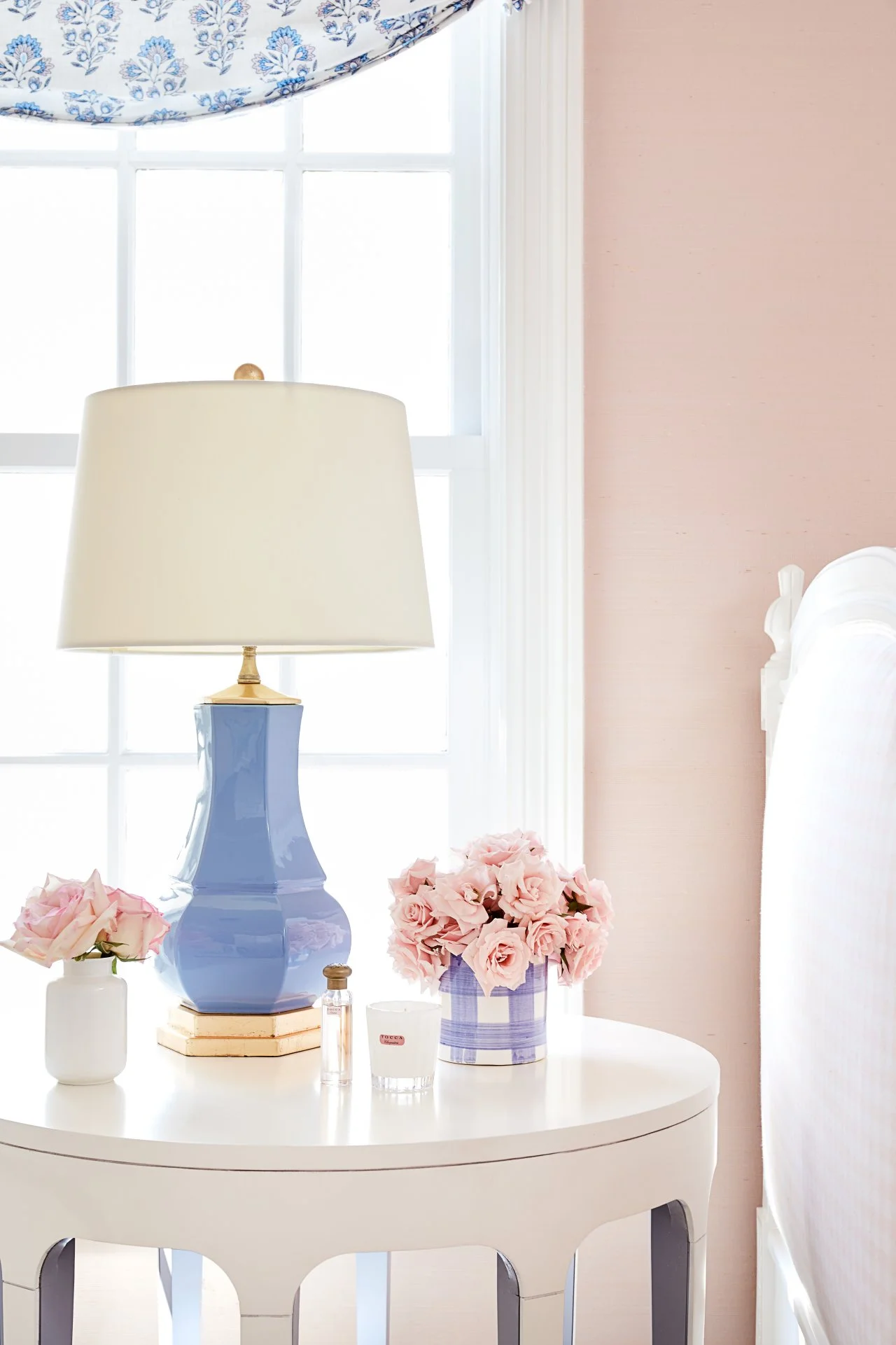
Cottage Nightstand With Rose Bouquets
Nosegays of roses bring a touch of romance to this bedside table tableau.

Photo By: Katie Nixon Photography
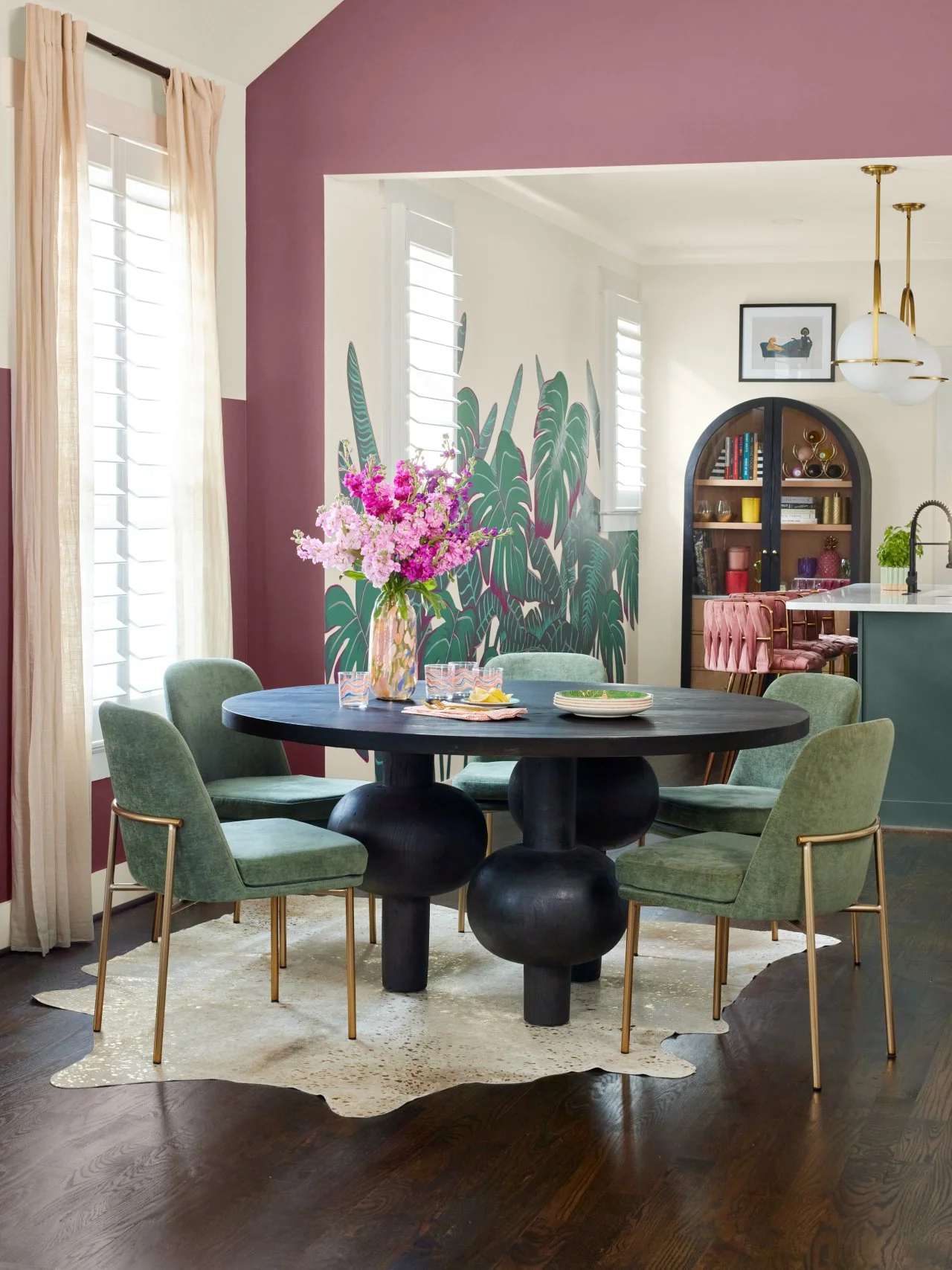
Purple Dining Room With a Wall Mural
This boho dining room from HGTV Magazine features mauve walls and a leafy hand-painted mural.
Photo By: Adam Albright
Eclectic and Bold Purple Living Room
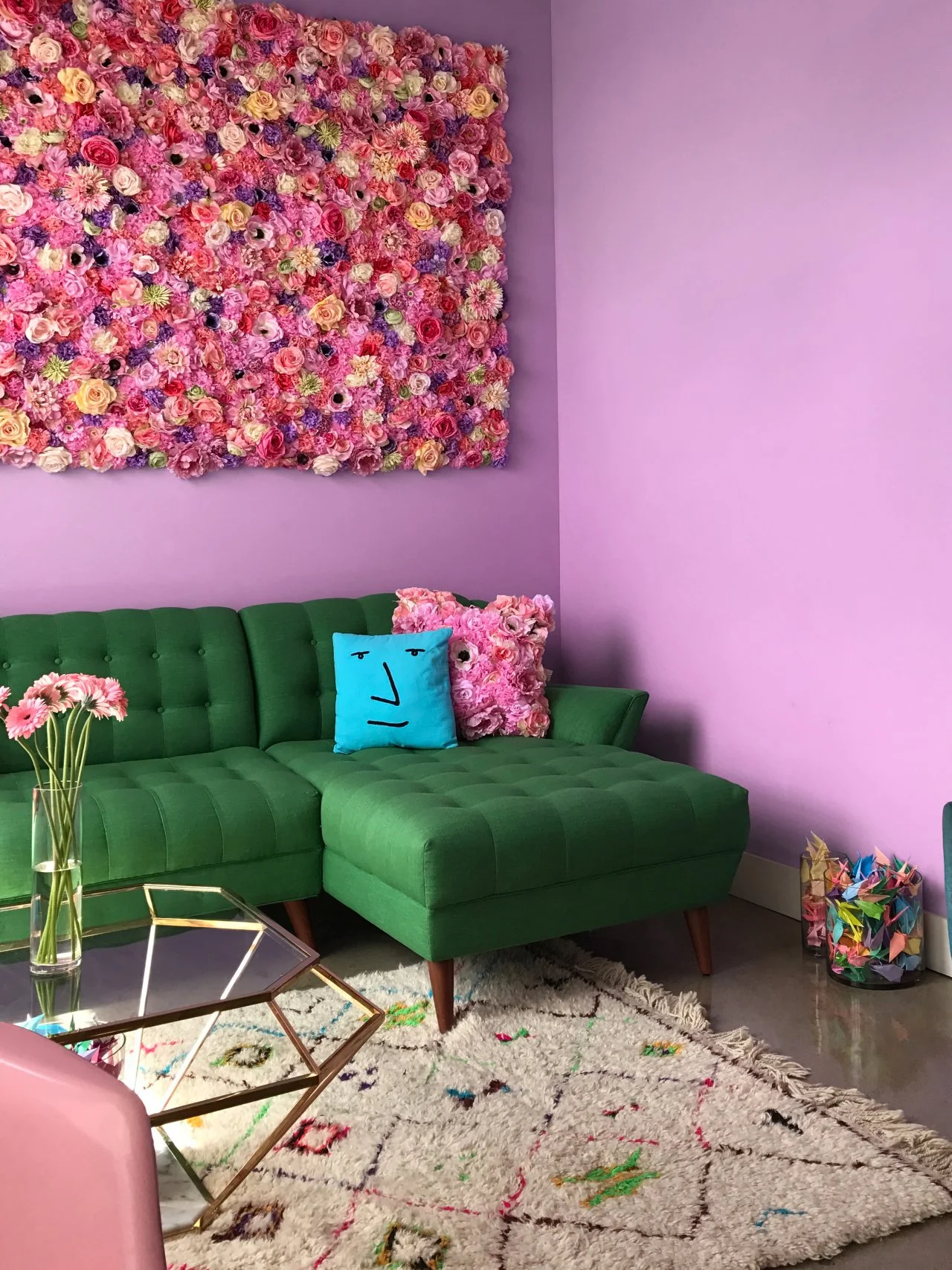
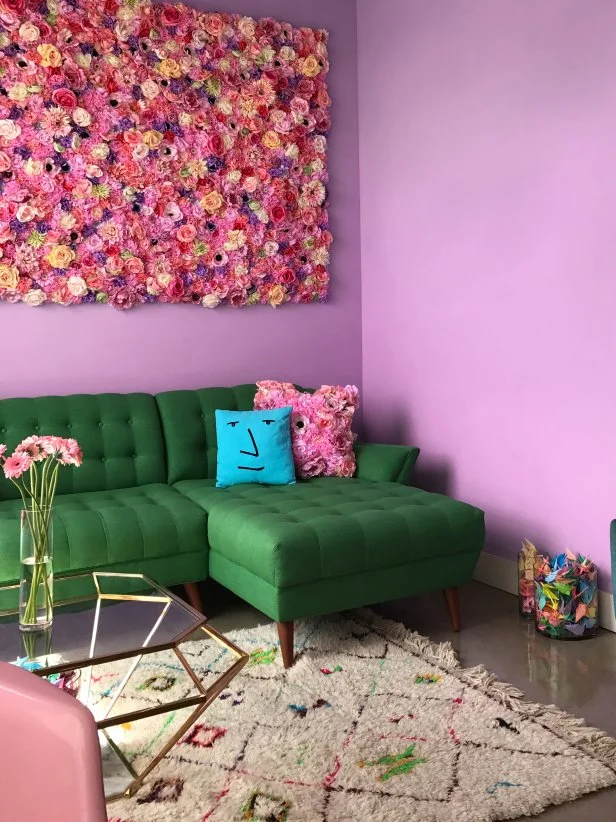
This fun living room from HGTV Magazine features purple-pink walls, a green sofa and a faux flower wall.
Photo By: Amina Mucciolo
A triad scheme is bold but more importantly, it's balanced. It's made up of any three colors that form a triangle in the center of the wheel.
Color Dimensions
In addition to understanding how colors work together, it's also helpful to know the three dimensions of the colors on the wheel.
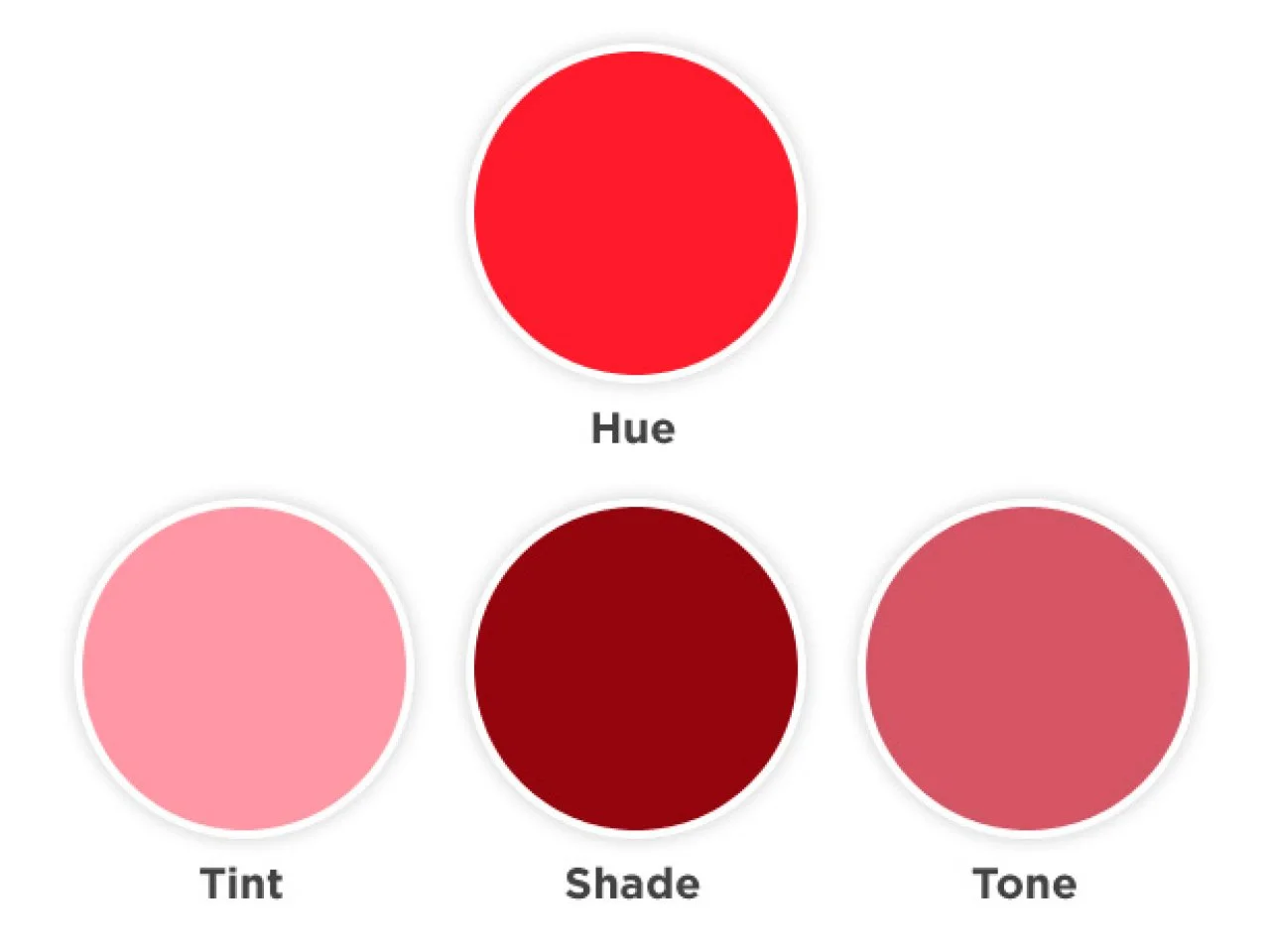
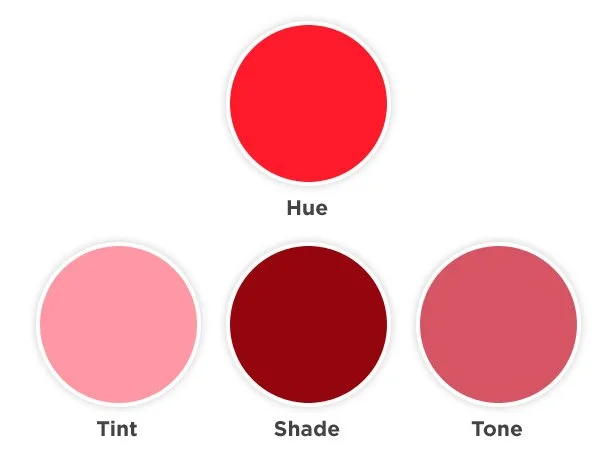
Hue is commonly used interchangeably with the word color but technically refers to the pure spectrum colors in the color wheel.
The value of a hue is determined by adding white to create a tint, black to create a shade or gray to create a tone.
Saturation is the purity of the hue. The colors on the wheel are considered to be in their purest form. As the colors move towards the center, as shown in the graphic at right, they are considered desaturated where no hue dominates.

Natural Reactions to Color
Do you shiver when you’re in a light blue space? Fan yourself in a room full of red? Don’t worry — there’s a scientific reason why. Colors are indelibly tied to natural elements like fire, water and sky, evoking certain responses just as if you were seeing and experiencing it firsthand.
Cool Colors
Cool colors like blue and green do just that — cool and soothe your mind, body and spirit. It's no wonder we flock to the ocean and mountains to rejuvenate our senses. These hues are best used in rooms where you want serenity to prevail.
Cool Color Ideas : Blue, Green, Purple + More 163 Photos
HGTV Magazine shares tips on how to use cool paint colors around your house.
Warm Colors
Warm colors like red, orange and yellow give off an energy and intensity unmatched by their cooler cousins. Use these hues in rooms where you anticipate (and want) activity and stimulation, like a kitchen, child’s playroom or exercise space.
Warm Color Ideas: Red, Pink, Orange, Yellow + More 125 Photos
HGTV Magazine shares tips on how to use warm paint colors around your house.